
Tag: stats
-
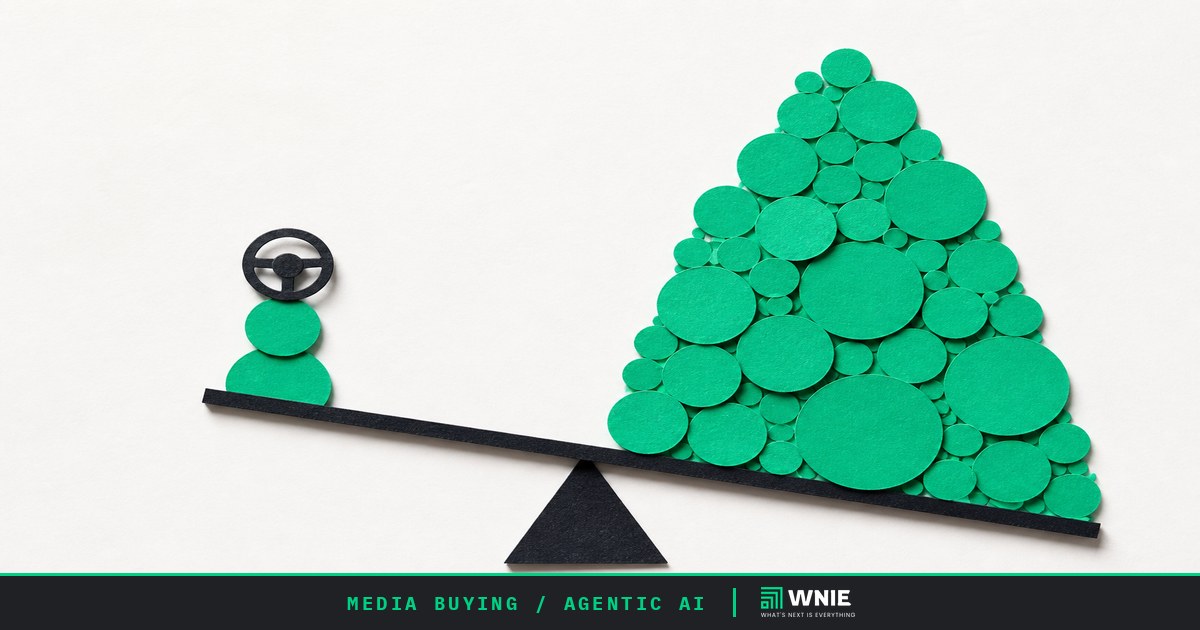
Most European Ad Execs Expect Agentic Buying Within a Year. Most Still Keep People Steering.
An IAB Europe survey of 50 ad executives finds 58% expect agentic ad buying to be in operational use or at scale within a year. Yet 36 of 47 say their organizations have no agent operating day to day, or one that humans still direct, and agents mostly handle reporting.
-
Gemini’s Billion Users Talk More Than They Type. Its Task Automation Runs in Two Countries.
Google says a billion people now use the Gemini app each month and 63% of them talk to it rather than type. The post naming that figure also says Gemini automates tasks across 40-plus apps. A July footnote limits the feature to two countries and a short list of phones.
-

ChatGPT’s Ads Miss the Prompt One Time in Seven — and Almost Never Make the Answer
SE Ranking ran 50,000 prompts through ChatGPT and found one ad in seven had nothing to do with the question. In news and politics, more than half missed. And in 96% of placements, the advertiser paying for the slot went unmentioned in the answer above it.
-

Etsy’s 36% Sales Boost: Insights from Google’s Holiday Guide
Etsy’s gross merchandise sales rose 36% across the 2025 holiday season, partly credited to Google’s AI Max, and it is the headline case study in the guide Google sent retailers on August 21. Independent measurement of AI Max points the other way, and Google’s own footnotes do not always match the claims.
-

Agency Leaders Predict Growth in Outcomes-Based Pricing, but Face Challenges.
Eighty-five percent of agency leaders expect to do more outcomes-based pricing. The consultancy that studied it says pure versions are “exceedingly rare” — what agencies more frequently agree to is an output fee with a performance measure bolted on. Sixty-nine percent name attribution as a barrier, and the same share name procurement.
-
Analyzing ChatGPT Ads: Study Reveals Key Insights
Accounts tied to lower-income ZIP codes were more likely to be shown ChatGPT ads at all, according to the first independent audit of advertising inside an LLM. It ran 91 fake users for three weeks before the ads stopped, and the authors think OpenAI worked out the accounts were not real.
-

Goldman Puts Advertising in the Group Where AI’s Jobs Drag Already Shows
Call center employment sits 39% below trend in the U.S., down 33% in Canada, 27% below trend in Germany. Goldman Sachs puts advertising services in the same group of four industries that have fallen sharply below historical trend across developed markets. Entry-level workers are hit at least 2x harder than other categories.
-

S4 Doubled First-Half Profit. Sorrell Says the Token Spending Has Been “Ill-Disciplined.”
S4 Capital’s margins widened to 12.3% and its first-half operating profit doubled. Its chair says the company has been ill-disciplined on token spending, and Goldman Sachs expects token consumption to rise 24-fold by 2030. Monks passes token costs to clients at no margin.
-

AT&T Built a Router That Sends 45 Billion Daily Tokens to the Cheapest Model
Open models already carry a quarter of AT&T’s AI work, and its chief data and AI officer expects that to reach 70% to 80%. Cost is one reason — savings of 80% to 90% in some applications. Control over the company’s own data is the other.
-

Zoom Is Spending on Creators to Get Cited by AI Search
Zoom wants to be read as an AI-first work platform rather than a meetings app, and it is buying creator partnerships to get there. Its CMO acknowledges there is no measurable link between creators and AI citations yet. Brands are now picking creators by who the LLMs quote.
-
Marketers Think AI Is Raising Their Emissions. Most Haven’t Measured It.
A survey of 200 senior marketing leaders finds 88% believe AI is increasing their carbon footprint. Only 36% have comprehensively measured it. The gap sits inside an otherwise improving sustainability picture, which is what makes it a governance problem rather than a budget one.
-

Americans Are Adopting AI Fast. Understanding It Is Another Matter.
Stagwell’s National Research Group is out with a study finding that while Americans are adopting AI quickly, most still use it for basic tasks – and many aren’t sure what it is. 58% of those polled believe AI is “looking up the answer in a huge database.” Just 13% correctly said AI is guessing which…
-

Google’s ATLAS Puts a Number on AI at Work: 21% of Tasks
Google’s first AI & Economy ATLAS report draws on 15 million de-identified interactions to describe what people actually do with AI. Adoption reaches 68% of occupations — but inside a typical job, AI touches about 21% of tasks, and fewer than 10% of work interactions automate anything.
-

Gen Z Keeps Using GenAI — And Gets Madder About It Anyway
Gallup’s latest “Voices of Gen Z” survey, conducted Feb. 24–March 4, 2026, with 1,572 U.S. 14- to 29-year-olds, sketches an audience marketers love to label “AI native,” then immediately complicates the label. Usage is steady: 51% of U.S. Gen Z say they use generative AI daily (22%) or weekly (29%). But the emotional weather has…
-

When Product Ships Weekly, Marketing Becomes the Bottleneck
HBR’s premise is blunt: AI sped up engineering first, and marketing is now stuck doing quarterly-era coordination in a continuous-release world. Citing Anthropic research, the piece notes that software engineering accounts for “nearly 50% of all agentic activity.” That helps explain why product teams are shipping continuously, and why marketing — with its cross-functional handoffs,…
-

Canva’s AI Report Says Marketers Are Using It Daily. Consumers Would Like a Label.
Canva’s State of Marketing and AI Report 2026 puts a number on the industry’s current mood: 97% of marketing leaders say they use AI in daily creative work, and 99% plan to increase AI investment this year. The audience, meanwhile, is not exactly clapping. According to the same report, 78% of consumers would rather see…
-

Ipsos Tested AI Ads Against Human Ones. Viewers Mostly Shrugged.
Ipsos set up a tidy little test for generative video: take 20 :30 ads from major brands, show them to 3,000 U.S. consumers in a distracted, “real feed” viewing environment via Ipsos Creative|Spark, and see whether AI-made work can hang with the human stuff. Half the ads were human-created originals; the other half were generated…
-

Marketers Keep Buying AI. The Skills Part Is Still Loading.
Digiday+ Research’s latest report, based on a survey of 142 brand and agency professionals plus interviews, shows AI investment moving from “nice-to-have” to “budget line item someone now has to explain.” Marketers reporting company investment in AI rose from 44% in 2022 to 57% in 2023, 71% in 2024, and 86% in 2025. The org…
-
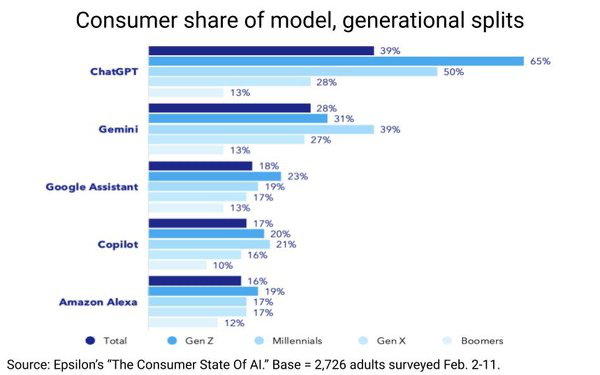
Gen Z’s AI Habit Is Mostly a Phone Habit
Publicis’ Epsilon unit has a new readout in its “The Consumer State Of AI” report, and the headline is familiar: ChatGPT has the biggest overall share of the consumer LLM market. The more useful wrinkle is the generational split. OpenAI’s ChatGPT indexes even higher with younger cohorts, followed by Google’s Gemini and Google Assistant, according…
-
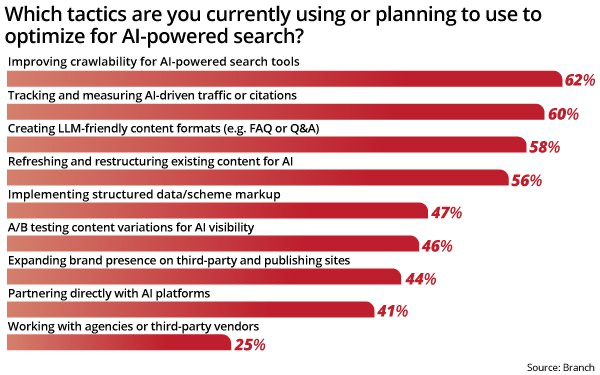
Nearly 80% Of Businesses Struggle To Measure AI Search Impact
Branch’s new enterprise benchmark data suggests AI-driven discovery is no longer a side quest: 26% of companies say AI search delivered more than half their site traffic in 2025, and 49% expect to cross that threshold by late 2026. AI search’s share of traffic is rising faster than traditional search (up from 35% to 50%),…
-

AI Is the New “What Should I Watch?” Button
Nielsen/Gracenote surveyed 4,003 U.S. AI chatbot users (ages 13–79) and found chatbots are now edging out streaming-service recommendation rails as the go-to source for what to watch. Usage is accelerating across the board: 66% say they’ve increased chatbot use in the last 12–18 months, jumping to 80% for Gen Alpha—and more than half of Gen…
-

AI adoption rises at work, but leaders use it most frequently
A new Gallup poll (via Axios) suggests the internal AI adoption curve has a familiar shape: leadership first, everyone else squinting at the change log. Even as companies debate whether to mandate AI or let employees experiment, the people at the top are the ones reaching for it most often—at least in organizations where AI…
-

Gen AI Boosts Productivity, But Can’t Turn Novices Into Experts
Harvard Business School’s Iavor Bojinov and Edward McFowland III set out to test the workplace vibe we’ve all felt lately: “AI makes you feel like you can do anything. But can you do [a task] as well as people whose job it is?” In an experiment with 78 employees at IG Group, they looked at…
-

AI brain fry: What marketers need to know
That wiped-out feeling after “saving time” with AI now has a label: AI brain fry—mental fatigue that comes from using and, more importantly, babysitting AI tools past your cognitive limit. Research cited from Boston Consulting Group and UC Riverside (published via Harvard Business Review) surveyed 1,488 full-time US workers: 14% reported AI brain fry overall,…
-
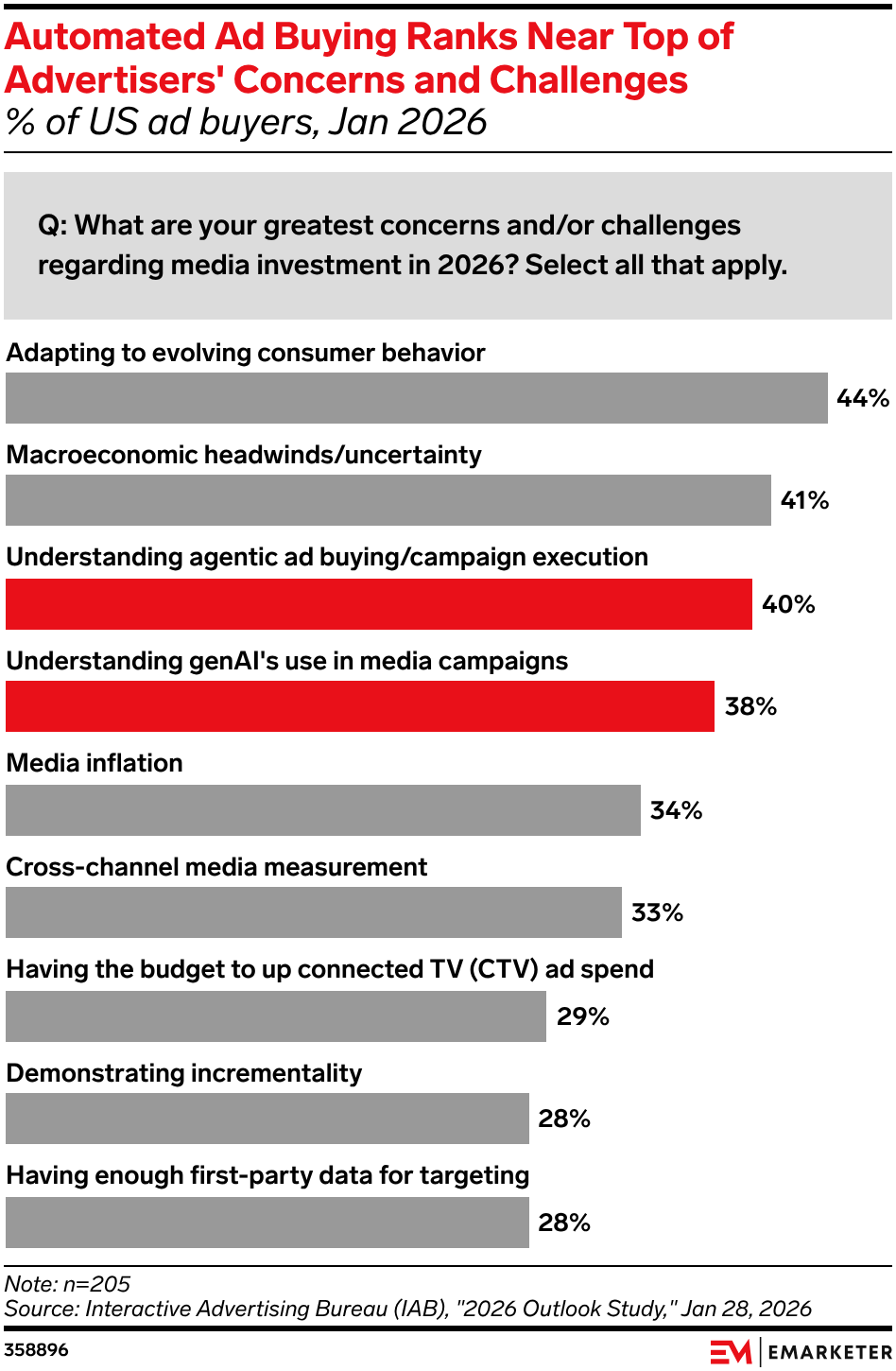
Agentic ad buying has moved from niche topic to top-tier anxiety for media planners
Agentic ad buying has officially graduated from niche curiosity to boardroom concern. In the IAB’s January 2026 Outlook Study, 40% of US ad buyers said that getting their arms around agentic ad buying and how campaigns actually get executed is one of their top worries for 2026—ranking right up there with the usual macro and…
-
America’s AI Mood: Heavy Use, Light Trust
A new Quinnipiac University poll says Americans are bringing AI into the daily routine—research, writing, school/work projects, and data analysis—but they’re keeping one hand on the eject button. Among nearly 1,400 respondents, 76% say they trust AI “rarely” or “only sometimes,” while just 21% trust it “most” or “almost all of the time.” Adoption is…
-

AI Agents: Plenty of Autopilot, Not Enough Seatbelts
MIT and a stack of academic collaborators reviewed documentation for 30 widely used “agentic” AI systems. TLDR: a lot of capability, not a lot of paperwork. Across eight disclosure categories, most systems provide little to no public detail on risks, safety testing, or governance. The gaps are basic. In many cases, it’s unclear whether you…
-

Walmart’s “Ask Sparky” Is Ringing Up 35% Bigger Carts
Walmart says shoppers who use Sparky, its AI shopping assistant inside the Walmart app, rack up baskets about 35% larger than shoppers who don’t, according to newly appointed CEO John Furner on the company’s Q4 earnings call. Sparky lives behind the smiley-face “Ask Sparky” button and helps customers with product discovery (finding items, summarizing reviews)…
-

Fembots, Football & Funny: What Viewers Want From Super Bowl Ads
Turns out Super Bowl viewers mostly want to laugh—with or without the help of an algorithm. A recent Harris Poll for Ad Age found that 71% of consumers are craving funny ads during this year’s Big Game, and humor is also what sticks, with 46% saying they’re most likely to remember a funny spot. Agencies…
-

YouTube Tops Reddit in AI’s New Citation Economy
Turns out LLMs don’t care if you have followers—they just want your transcripts. YouTube has leapfrogged Reddit to become the leading social source cited in AI-generated search results, according to new data from Bluefish, Emberos, Goodie AI, and Profound. That’s a sharp contrast from just months ago, when Reddit was still dominating AI responses thanks…
-

Brands Trust AI More Than Gen Z Does—And It’s Showing
AI is now a staple in the ad toolkit, but don’t assume younger consumers are thrilled about it. According to new data from IAB and Sonata Insights, 82% of ad execs believe Gen Z and Millennials feel upbeat about AI-generated ads. In reality? Only 45% do—down from 2024—and negative sentiment among Gen Z has nearly…
-

Study Reveals AI-Only Ads Boost Engagement Over Hybrid Approaches
This one is going to be maybe a little controversial, or at least news that humans don’t want to hear. A joint study from NYU and Emory University has delivered a sharp rebuke to the idea that humans and AI make better creatives together. After testing GenAI ads across more than 100,000 impressions, the researchers…
-

Smart Shelves and Smarter Spend: Retail’s AI Budget Boom
Retailers and CPG companies are no longer dabbling in AI—they’re bankrolling it. NVIDIA’s latest survey shows that 90% of industry leaders plan to hike their AI budgets in 2026, focusing heavily on open-source tools and agentic AI. Why? Because AI isn’t just handling analytics; it’s pulling serious weight in supply chain forecasting, customer personalization, and…
-

Why Marketers Hesitate to Fully Embrace Agentic AI
Agentic AI has spent 2025 positioning itself as an all-in-one marketing team—thinking, writing, and executing campaigns with minimal human input. But despite the headlines, marketers aren’t exactly handing over the keys. The concept of agentic AI—AI systems with context, access to tools and decision making authority working cooperatively with little oversight—has intrigued brands, yet hesitation…
-
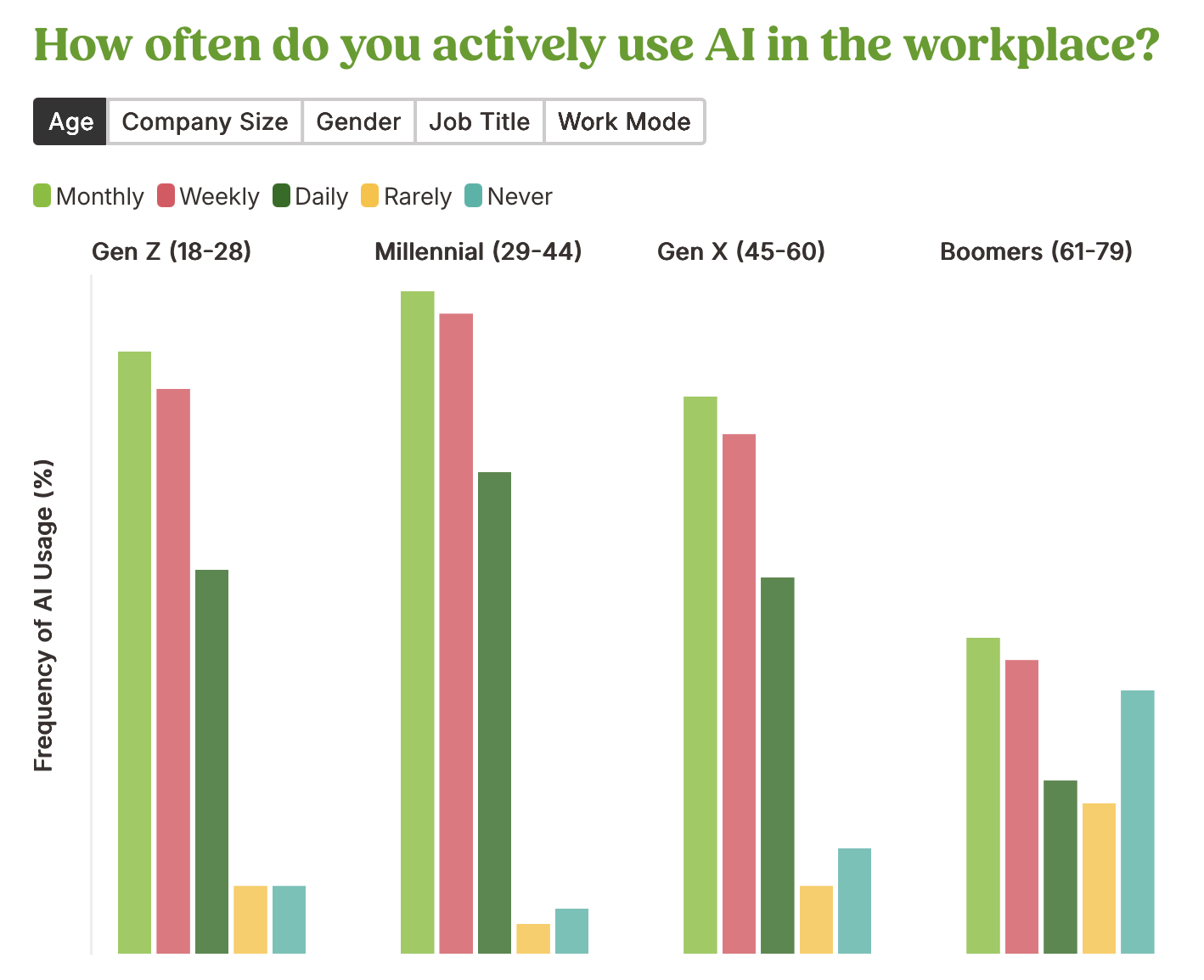
AI Adoption Gap Between Executives and Employees
A new BambooHR survey of 1,500+ U.S. salaried employees shows the AI divide between executives and employees is more Grand Canyon than puddle. While 72% of VP-level execs use AI tools daily, only 18% of individual contributors (ICs) do the same. The gap isn’t just in adoption—it’s in values and perceptions. Execs see AI-generated work…
-

AI in Advertising: Consumer Reactions and Emotional Engagement
System1’s deep dive into generative AI advertising reveals something pundits love to debate but consumers don’t appear to care about: whether or not AI made the ad. In testing 18 AI-generated spots across three countries and 2,700 viewers, ads created with machine help actually outperformed traditional ones on emotional engagement, scoring 3.4 Stars against a…