
Category: Research and data
-
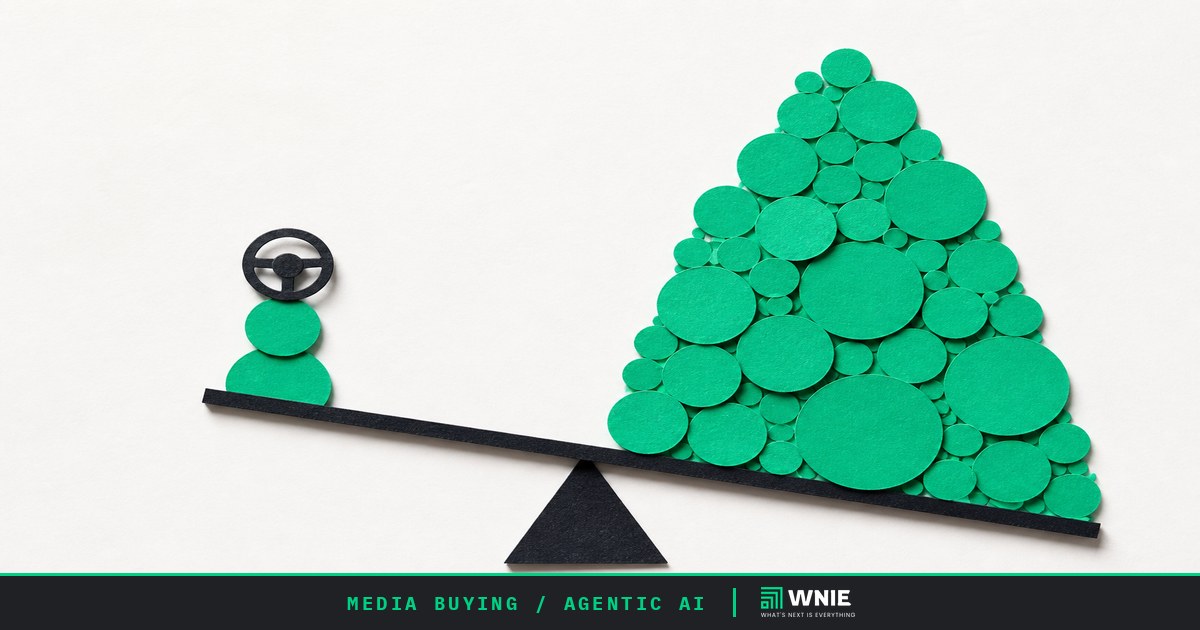
Most European Ad Execs Expect Agentic Buying Within a Year. Most Still Keep People Steering.
An IAB Europe survey of 50 ad executives finds 58% expect agentic ad buying to be in operational use or at scale within a year. Yet 36 of 47 say their organizations have no agent operating day to day, or one that humans still direct, and agents mostly handle reporting.
-

Time Prices an AI Agent’s Attention at Five to Seven Times Display
Time is selling ad impressions to AI agents at roughly five to seven times its display rate, on the argument that one agent read may shape later recommendations. Chasing impact on AI agents in a different way, Expedia has staffed a business-to-agent function for a channel that carried under 1.5% of its traffic in May.
-
Gemini’s Billion Users Talk More Than They Type. Its Task Automation Runs in Two Countries.
Google says a billion people now use the Gemini app each month and 63% of them talk to it rather than type. The post naming that figure also says Gemini automates tasks across 40-plus apps. A July footnote limits the feature to two countries and a short list of phones.
-

ChatGPT’s Ads Miss the Prompt One Time in Seven — and Almost Never Make the Answer
SE Ranking ran 50,000 prompts through ChatGPT and found one ad in seven had nothing to do with the question. In news and politics, more than half missed. And in 96% of placements, the advertiser paying for the slot went unmentioned in the answer above it.
-
Etsy’s 36% Sales Boost: Insights from Google’s Holiday Guide
Etsy’s gross merchandise sales rose 36% across the 2025 holiday season, partly credited to Google’s AI Max, and it is the headline case study in the guide Google sent retailers on August 21. Independent measurement of AI Max points the other way, and Google’s own footnotes do not always match the claims.
-

Agency Leaders Predict Growth in Outcomes-Based Pricing, but Face Challenges.
Eighty-five percent of agency leaders expect to do more outcomes-based pricing. The consultancy that studied it says pure versions are “exceedingly rare” — what agencies more frequently agree to is an output fee with a performance measure bolted on. Sixty-nine percent name attribution as a barrier, and the same share name procurement.
-
Brands Will Let AI Rebuild the Shoot. They Stop at the Actors.
Nearly every marketing leader now uses AI in creative work, and 49% of U.S. consumers think AI has made content quality worse. Brands are settling on rules: use AI to rebuild footage they already own, and keep AI-generated actors away from anything a customer sees.
-
Analyzing ChatGPT Ads: Study Reveals Key Insights
Accounts tied to lower-income ZIP codes were more likely to be shown ChatGPT ads at all, according to the first independent audit of advertising inside an LLM. It ran 91 fake users for three weeks before the ads stopped, and the authors think OpenAI worked out the accounts were not real.
-
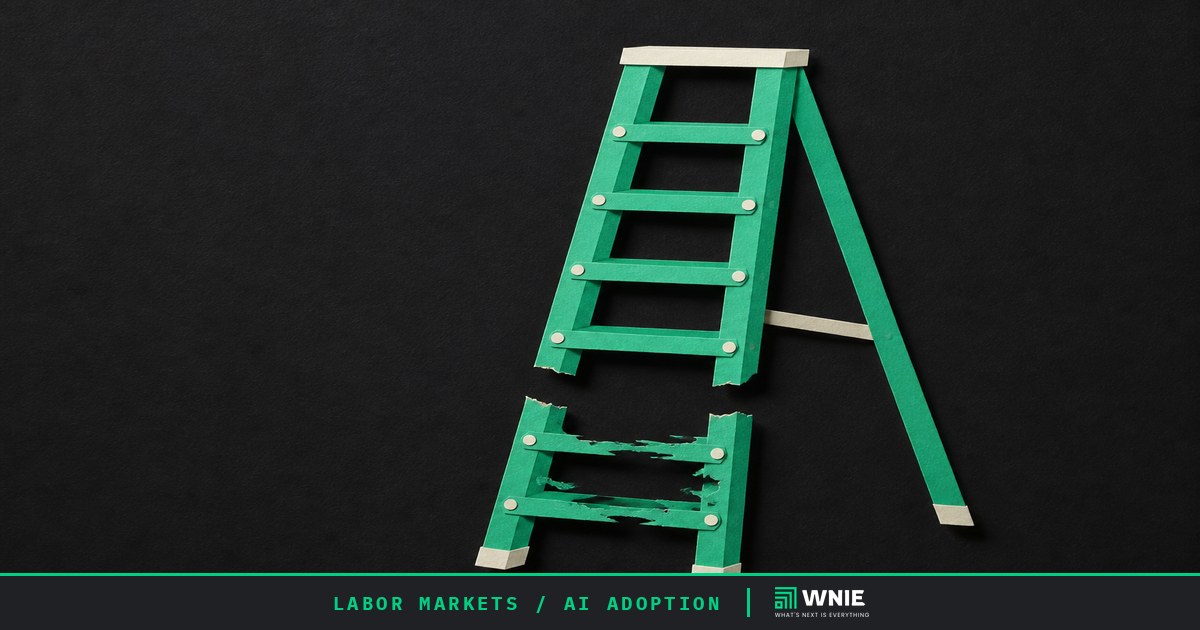
Goldman Puts Advertising in the Group Where AI’s Jobs Drag Already Shows
Call center employment sits 39% below trend in the U.S., down 33% in Canada, 27% below trend in Germany. Goldman Sachs puts advertising services in the same group of four industries that have fallen sharply below historical trend across developed markets. Entry-level workers are hit at least 2x harder than other categories.
-
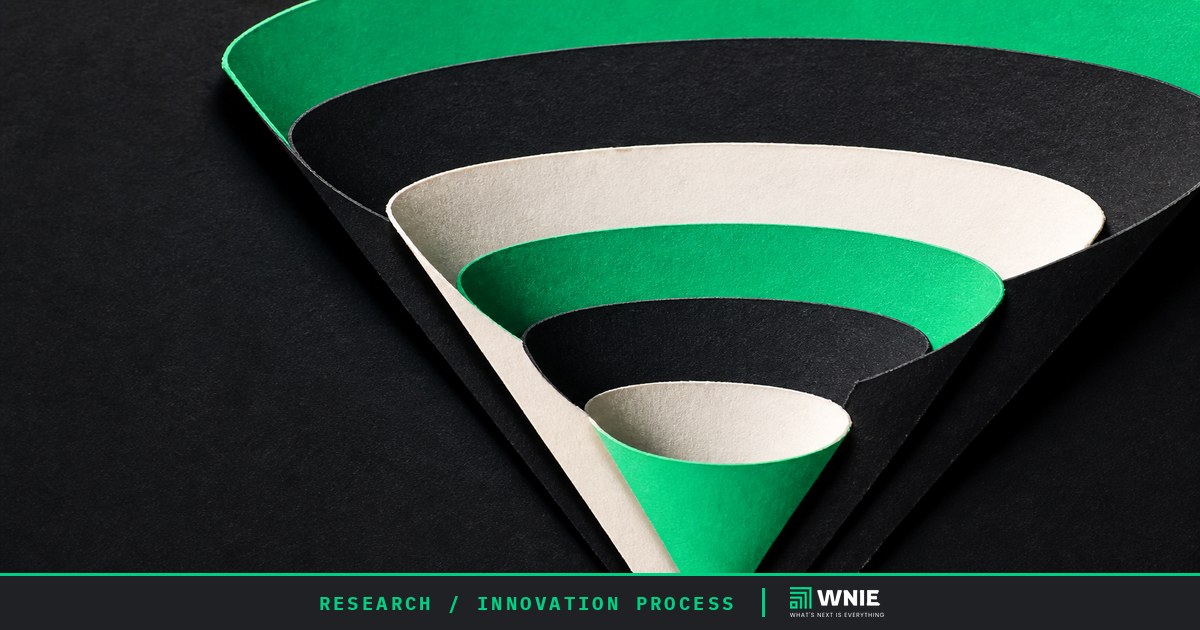
AI Deepens Three of Four Innovation Bottlenecks. Only the Volume Problem Shrinks.
Give every innovation team the same models and the results diverge anyway. Five marketing academics traced four stages of the pipeline and found generative AI deepens the human bottleneck at three of them; narrowing ideation, flattering fluent pitches, and simulating consumers who behave far too rationally.
-
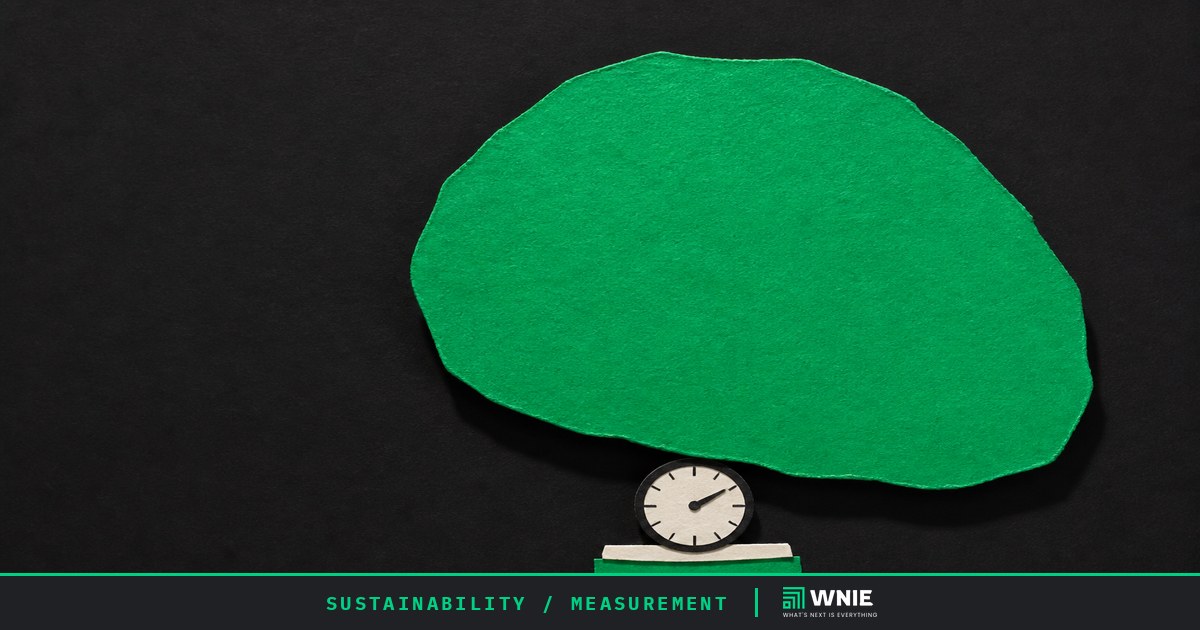
Marketers Think AI Is Raising Their Emissions. Most Haven’t Measured It.
A survey of 200 senior marketing leaders finds 88% believe AI is increasing their carbon footprint. Only 36% have comprehensively measured it. The gap sits inside an otherwise improving sustainability picture, which is what makes it a governance problem rather than a budget one.
-

Google’s ATLAS Puts a Number on AI at Work: 21% of Tasks
Google’s first AI & Economy ATLAS report draws on 15 million de-identified interactions to describe what people actually do with AI. Adoption reaches 68% of occupations — but inside a typical job, AI touches about 21% of tasks, and fewer than 10% of work interactions automate anything.
-
AI Is Becoming Loyalty’s Gatekeeper
Gale’s latest loyalty report is less about points and more about the chatbot now standing between a brand and the person it insists on calling a “relationship.” In “The Preference Economy,” Gale surveyed 3,000 consumers in the U.S. and U.K. and found that 56% are comfortable delegating all communications with a brand through AI. Nearly…
-

MIT Tests AI Fake-News Help, Finds a Withdrawal Symptom
MIT Media Lab researchers ran a four-week experiment with 67 participants, asking them to judge whether news headlines and images were real or fake — sometimes with an AI chatbot helping, sometimes not. With AI assistance, participants were 21% more accurate at spotting misinformation. The catch is that the “help” appeared to come with strings:…
-

Your Employees Are Using AI. They’re Just Not Telling You How.
A 31-year-old physician was using DoximityGPT — HIPAA-compliant and organization-approved — with a personal prompting template he said produced “astoundingly good results.” His colleagues were struggling with the same tool, and he believed the template would help. He still didn’t share it. The anecdote lands because it is so banal: nothing clandestine, nothing technically fancy,…
-

Gen Z Keeps Using GenAI — And Gets Madder About It Anyway
Gallup’s latest “Voices of Gen Z” survey, conducted Feb. 24–March 4, 2026, with 1,572 U.S. 14- to 29-year-olds, sketches an audience marketers love to label “AI native,” then immediately complicates the label. Usage is steady: 51% of U.S. Gen Z say they use generative AI daily (22%) or weekly (29%). But the emotional weather has…
-

Canva’s AI Report Says Marketers Are Using It Daily. Consumers Would Like a Label.
Canva’s State of Marketing and AI Report 2026 puts a number on the industry’s current mood: 97% of marketing leaders say they use AI in daily creative work, and 99% plan to increase AI investment this year. The audience, meanwhile, is not exactly clapping. According to the same report, 78% of consumers would rather see…
-

Ipsos Tested AI Ads Against Human Ones. Viewers Mostly Shrugged.
Ipsos set up a tidy little test for generative video: take 20 :30 ads from major brands, show them to 3,000 U.S. consumers in a distracted, “real feed” viewing environment via Ipsos Creative|Spark, and see whether AI-made work can hang with the human stuff. Half the ads were human-created originals; the other half were generated…
-

AI Citations, Demystified: The Robots Have Apparently Discovered SEO
Cyrus Shepard, founder of Zyppy SEO, went spelunking through 54 experiments, patents, and case studies and came back with a ranked list of 23 factors correlated with getting cited by AI search engines like ChatGPT, Gemini, and Perplexity. The headline takeaway is unsexy on purpose: the top factors are URL accessibility, scoring 9.5, and plain…
-

Marketers Keep Buying AI. The Skills Part Is Still Loading.
Digiday+ Research’s latest report, based on a survey of 142 brand and agency professionals plus interviews, shows AI investment moving from “nice-to-have” to “budget line item someone now has to explain.” Marketers reporting company investment in AI rose from 44% in 2022 to 57% in 2023, 71% in 2024, and 86% in 2025. The org…
-
Behind the A.I. Boom, a Boring Business Is Soaring With Better Ads
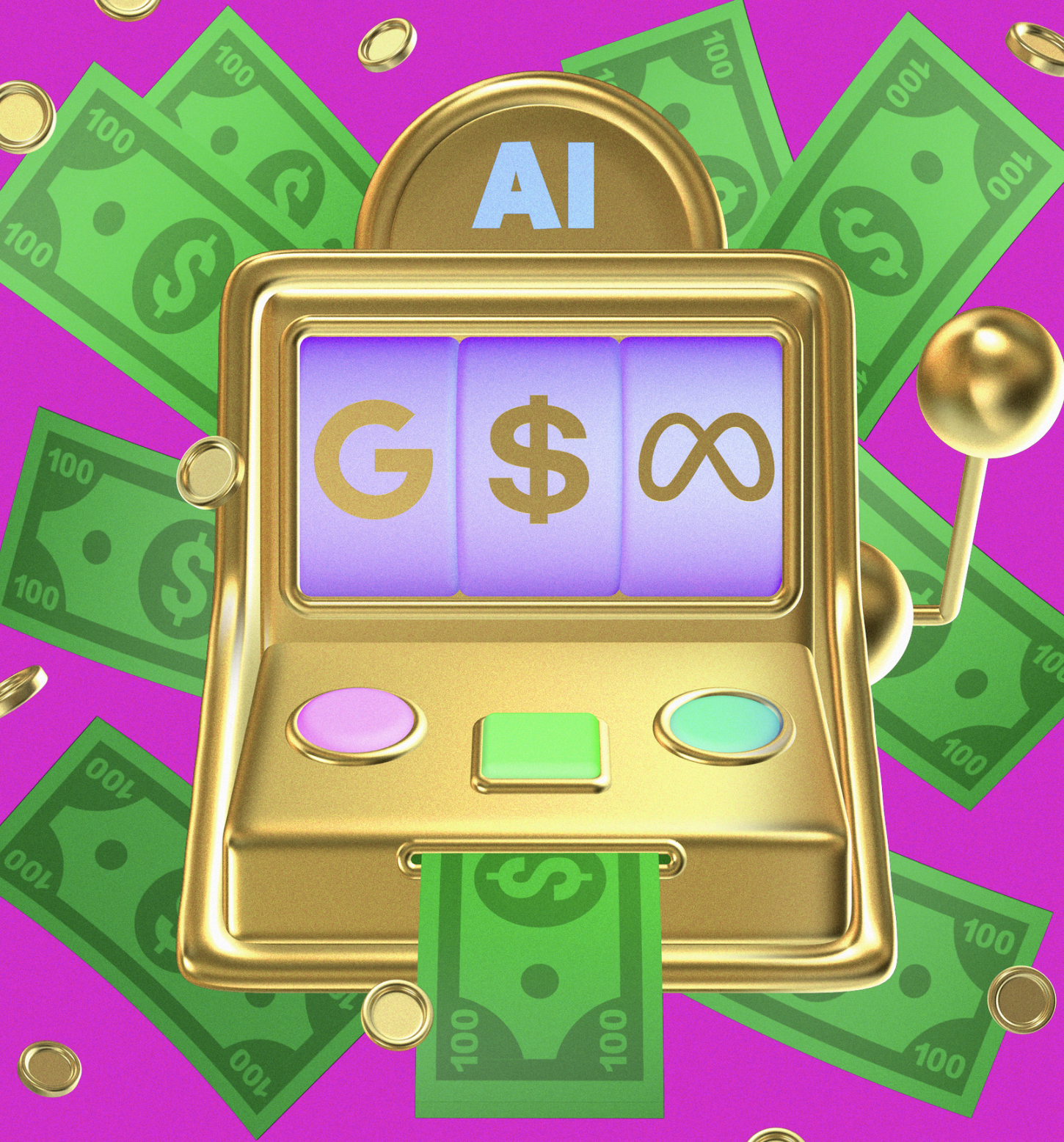
DribbleUp, a sports equipment company, says it used to spend its own time and resources figuring out whom to target on Facebook. For the last two years, it has placed those ads “entirely through Facebook’s artificial intelligence tools,” according to The New York Times. Since then, the company says sales have outpaced marketing expenses. It…
-
Gen Z’s AI Habit Is Mostly a Phone Habit
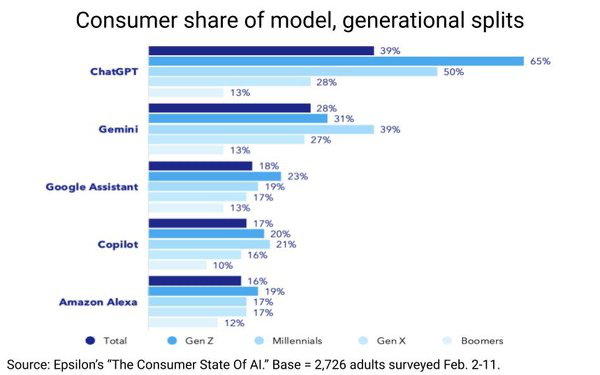
Publicis’ Epsilon unit has a new readout in its “The Consumer State Of AI” report, and the headline is familiar: ChatGPT has the biggest overall share of the consumer LLM market. The more useful wrinkle is the generational split. OpenAI’s ChatGPT indexes even higher with younger cohorts, followed by Google’s Gemini and Google Assistant, according…
-
Nearly 80% Of Businesses Struggle To Measure AI Search Impact
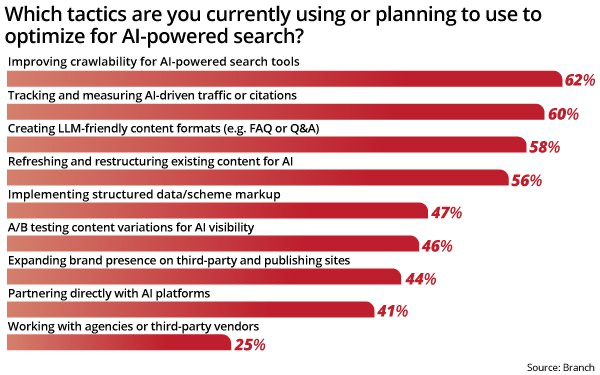
Branch’s new enterprise benchmark data suggests AI-driven discovery is no longer a side quest: 26% of companies say AI search delivered more than half their site traffic in 2025, and 49% expect to cross that threshold by late 2026. AI search’s share of traffic is rising faster than traditional search (up from 35% to 50%),…
-

Brands May Actually Benefit From Advertising Next to AI Content, Per Study
A new study from OM Media Trials (Omnicom Media’s research unit) and brand safety vendor Zefr suggests the panic around ads appearing next to AI-generated content needs a little nuance. They surveyed nearly 5,000 people in the U.S. and Canada, testing reactions to ads placed after eight types of AI-generated video. The headline: some AI…
-

AI Is the New “What Should I Watch?” Button
Nielsen/Gracenote surveyed 4,003 U.S. AI chatbot users (ages 13–79) and found chatbots are now edging out streaming-service recommendation rails as the go-to source for what to watch. Usage is accelerating across the board: 66% say they’ve increased chatbot use in the last 12–18 months, jumping to 80% for Gen Alpha—and more than half of Gen…
-
Google: AI ads driving up to 80% sales lift for some brands
Google’s message is basically: AI didn’t kill search, it just made it chattier—and ads are coming along for the ride. Alphabet cleared $400B in revenue in 2025, with Q4 ad revenue at $82.28B (+13.5% YoY) and YouTube ads at $11.38B (about +9% YoY). So despite the “AI chatbots will eat search” anxiety, Google’s ad engine…
-

The $31.5% Question: When Does “AI” Need a Label?
AI disclosure in ads sounds simple until you start counting what qualifies: a generated background, a synthesized soundtrack, a digital human, a product demo that never happened. That nuance matters because labeling isn’t just a legal checkbox—it can be a performance tax. Research from NYU Stern and Emory University suggests AI disclosure can cut ad…
-

AI adoption rises at work, but leaders use it most frequently
A new Gallup poll (via Axios) suggests the internal AI adoption curve has a familiar shape: leadership first, everyone else squinting at the change log. Even as companies debate whether to mandate AI or let employees experiment, the people at the top are the ones reaching for it most often—at least in organizations where AI…
-

Gen AI Boosts Productivity, But Can’t Turn Novices Into Experts
Harvard Business School’s Iavor Bojinov and Edward McFowland III set out to test the workplace vibe we’ve all felt lately: “AI makes you feel like you can do anything. But can you do [a task] as well as people whose job it is?” In an experiment with 78 employees at IG Group, they looked at…
-

AI brain fry: What marketers need to know
That wiped-out feeling after “saving time” with AI now has a label: AI brain fry—mental fatigue that comes from using and, more importantly, babysitting AI tools past your cognitive limit. Research cited from Boston Consulting Group and UC Riverside (published via Harvard Business Review) surveyed 1,488 full-time US workers: 14% reported AI brain fry overall,…
-
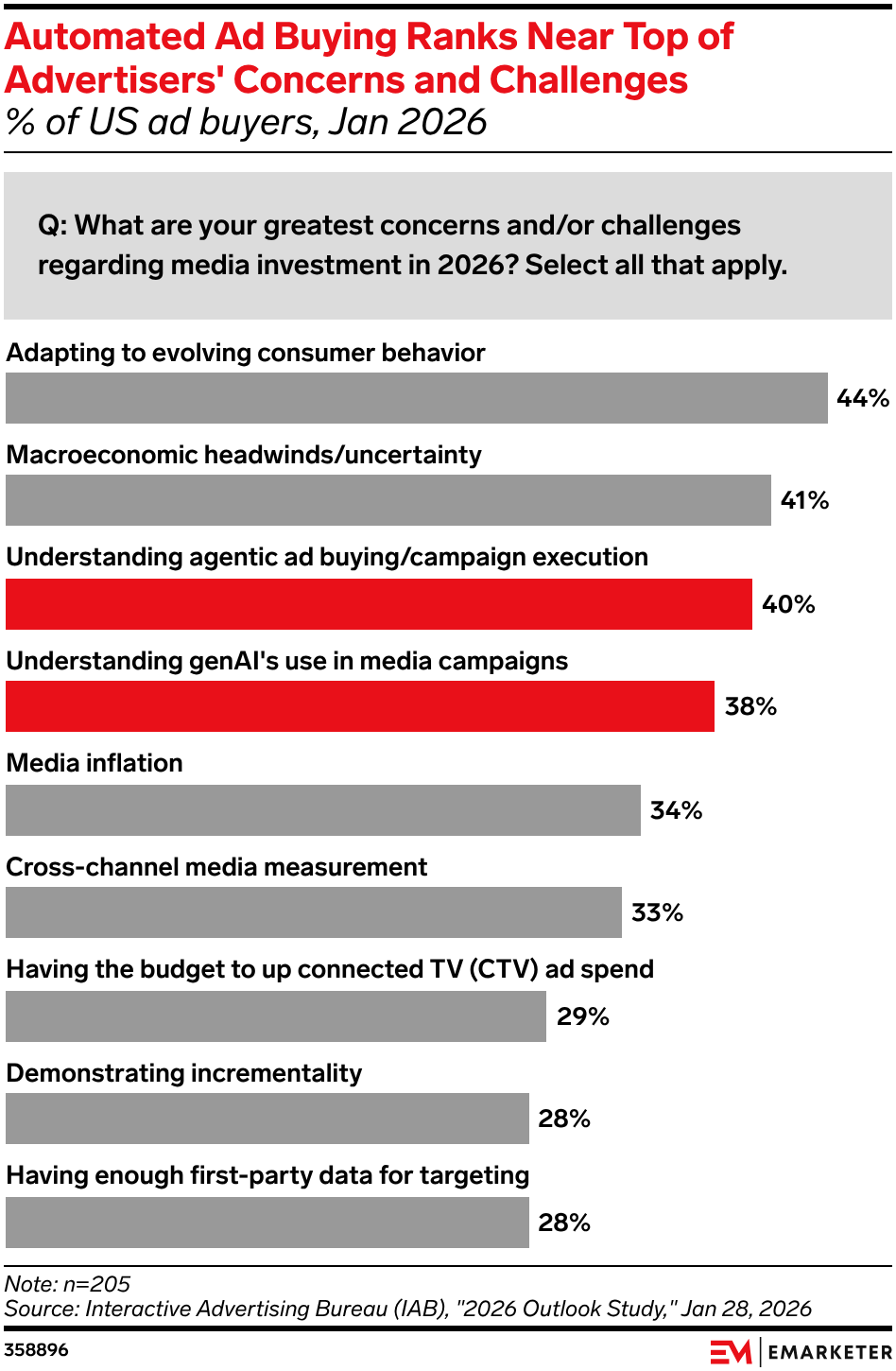
Agentic ad buying has moved from niche topic to top-tier anxiety for media planners
Agentic ad buying has officially graduated from niche curiosity to boardroom concern. In the IAB’s January 2026 Outlook Study, 40% of US ad buyers said that getting their arms around agentic ad buying and how campaigns actually get executed is one of their top worries for 2026—ranking right up there with the usual macro and…
-
America’s AI Mood: Heavy Use, Light Trust
A new Quinnipiac University poll says Americans are bringing AI into the daily routine—research, writing, school/work projects, and data analysis—but they’re keeping one hand on the eject button. Among nearly 1,400 respondents, 76% say they trust AI “rarely” or “only sometimes,” while just 21% trust it “most” or “almost all of the time.” Adoption is…
-

AI Agents: Plenty of Autopilot, Not Enough Seatbelts
MIT and a stack of academic collaborators reviewed documentation for 30 widely used “agentic” AI systems. TLDR: a lot of capability, not a lot of paperwork. Across eight disclosure categories, most systems provide little to no public detail on risks, safety testing, or governance. The gaps are basic. In many cases, it’s unclear whether you…
-
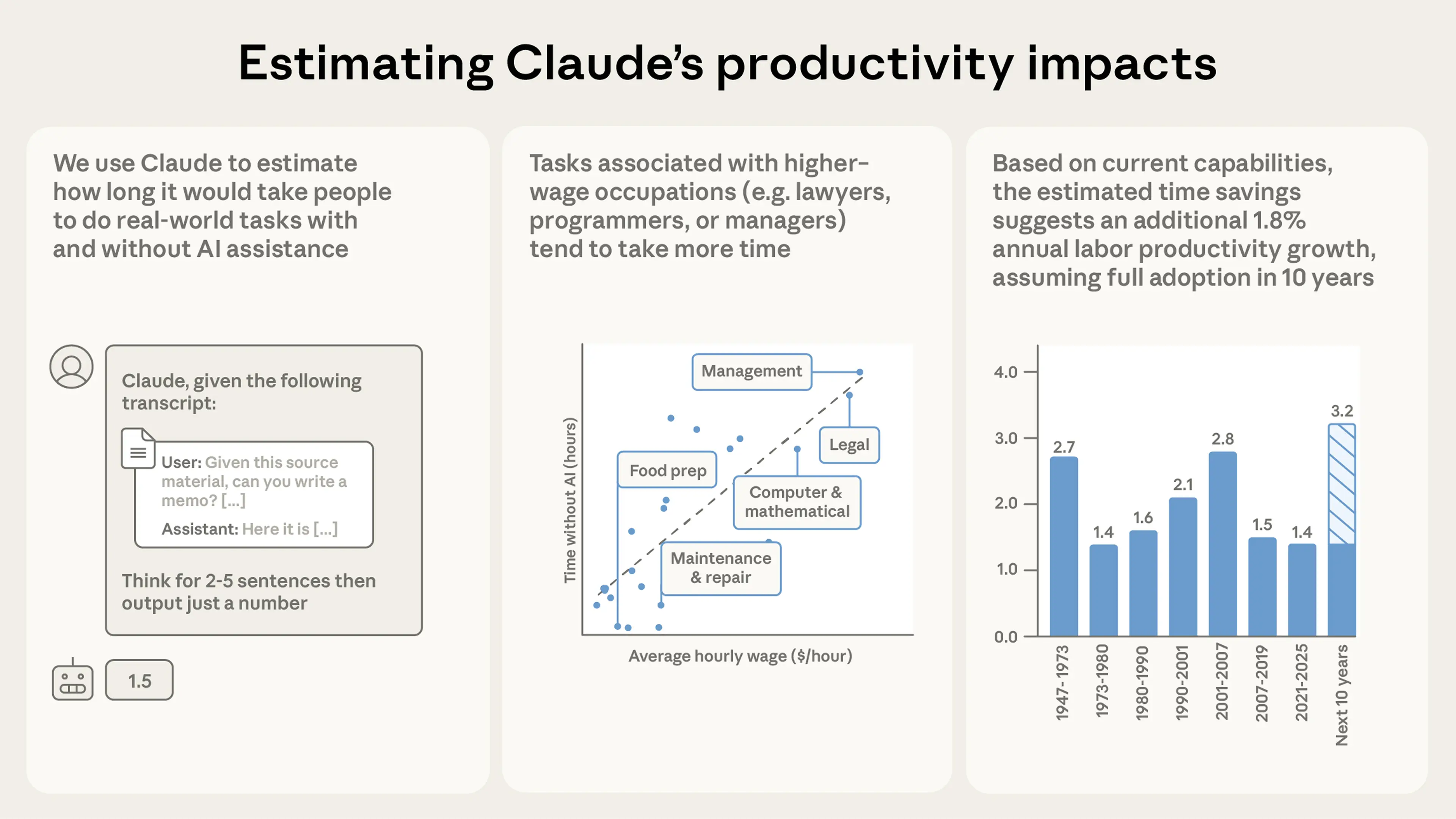
Claude as a Timeclock: What 100,000 Chats Say About Productivity
Anthropic ran a privacy-preserving analysis of 100,000 real Claude.ai conversations to estimate how long people’s tasks would take with vs. without AI help. Claude’s own scoring says the typical task would take about 90 minutes unassisted, and that using Claude cuts completion time by roughly 80% on average. They also mapped tasks to O*NET occupations…
-

Fembots, Football & Funny: What Viewers Want From Super Bowl Ads
Turns out Super Bowl viewers mostly want to laugh—with or without the help of an algorithm. A recent Harris Poll for Ad Age found that 71% of consumers are craving funny ads during this year’s Big Game, and humor is also what sticks, with 46% saying they’re most likely to remember a funny spot. Agencies…
-

YouTube Tops Reddit in AI’s New Citation Economy
Turns out LLMs don’t care if you have followers—they just want your transcripts. YouTube has leapfrogged Reddit to become the leading social source cited in AI-generated search results, according to new data from Bluefish, Emberos, Goodie AI, and Profound. That’s a sharp contrast from just months ago, when Reddit was still dominating AI responses thanks…