
What’s Next is Everything: marketing with emerging tech
-

A Craft Distillery Got an Idea a Physical Shoot Would Price Out
A Michigan craft distillery doesn’t have a giant’s budget. Farley Oil and Smoke&Oakum made its bourbon spot with no physical shoot. The director says that didn’t make the ad cheaper. It made an ambitious idea worth pitching to a client this size at all.
-

Google Hired Three Creative Chiefs to Make AI Spots — and Filmed Them Doing It
Jayanta Jenkins ran at least 300 iterations of his spot in Google Flow. Tiffany Rolfe had to fact-check the historical details the model invented for hers. Google put three A-list creatives on its AI tools, pointed them at small businesses, and filmed the trial and error for release alongside the ads.
-

Etsy’s 36% Sales Boost: Insights from Google’s Holiday Guide
Etsy’s gross merchandise sales rose 36% across the 2025 holiday season, partly credited to Google’s AI Max, and it is the headline case study in the guide Google sent retailers on August 21. Independent measurement of AI Max points the other way, and Google’s own footnotes do not always match the claims.
-

Agency Leaders Predict Growth in Outcomes-Based Pricing, but Face Challenges.
Eighty-five percent of agency leaders expect to do more outcomes-based pricing. The consultancy that studied it says pure versions are “exceedingly rare” — what agencies more frequently agree to is an output fee with a performance measure bolted on. Sixty-nine percent name attribution as a barrier, and the same share name procurement.
-
Brands Will Let AI Rebuild the Shoot. They Stop at the Actors.
Nearly every marketing leader now uses AI in creative work, and 49% of U.S. consumers think AI has made content quality worse. Brands are settling on rules: use AI to rebuild footage they already own, and keep AI-generated actors away from anything a customer sees.
-
Analyzing ChatGPT Ads: Study Reveals Key Insights
Accounts tied to lower-income ZIP codes were more likely to be shown ChatGPT ads at all, according to the first independent audit of advertising inside an LLM. It ran 91 fake users for three weeks before the ads stopped, and the authors think OpenAI worked out the accounts were not real.
-
AI Roundup: Pelé’s Lost Goal, a Referee’s-Eye View, and a Cap That Hides You From Cameras
A goal from 1959 that no camera recorded, rebuilt with a stunt double and Gemini Omni. A World Cup engine that finds you a second team when yours goes out. A cap that spots a phone pointed at you and covers your face. Six campaigns, one dependency.
-

Butler/Till Pointed Its Buying Agent at iHeart’s, Skipping the SSP
Two AI agents — one built by the agency, one by the publisher — met over an MCP server and placed just under $10,000 of podcast and streaming audio inventory. No SSP in the middle. Butler/Till says CPMs came in 42% below the client’s own benchmark for direct buying.
-

Goldman Puts Advertising in the Group Where AI’s Jobs Drag Already Shows
Call center employment sits 39% below trend in the U.S., down 33% in Canada, 27% below trend in Germany. Goldman Sachs puts advertising services in the same group of four industries that have fallen sharply below historical trend across developed markets. Entry-level workers are hit at least 2x harder than other categories.
-
Perplexity Blocks Time’s Agent-Only Ads and Puts Publishers’ Trust Scores at Risk
Time built ads only AI agents can see. Perplexity has decided they will not count, calls the practice deceptive, and says publishers who run them risk a hit to their trust score. Its objection is to the ads existing, not to how they are labeled.
-

Monks’ Co-Founder: The Billable Hour Punishes the Agency That Uses AI Well
Every vendor at Ai4 was selling the same tenfold speedup, which Wesley ter Haar flags as a pervasive issue with AI tooling – when the speed is off the shelf, it is not a moat. The Monks co-founder argues the real constraint is the legacy model: agencies need to stop selling time, because getting faster…
-
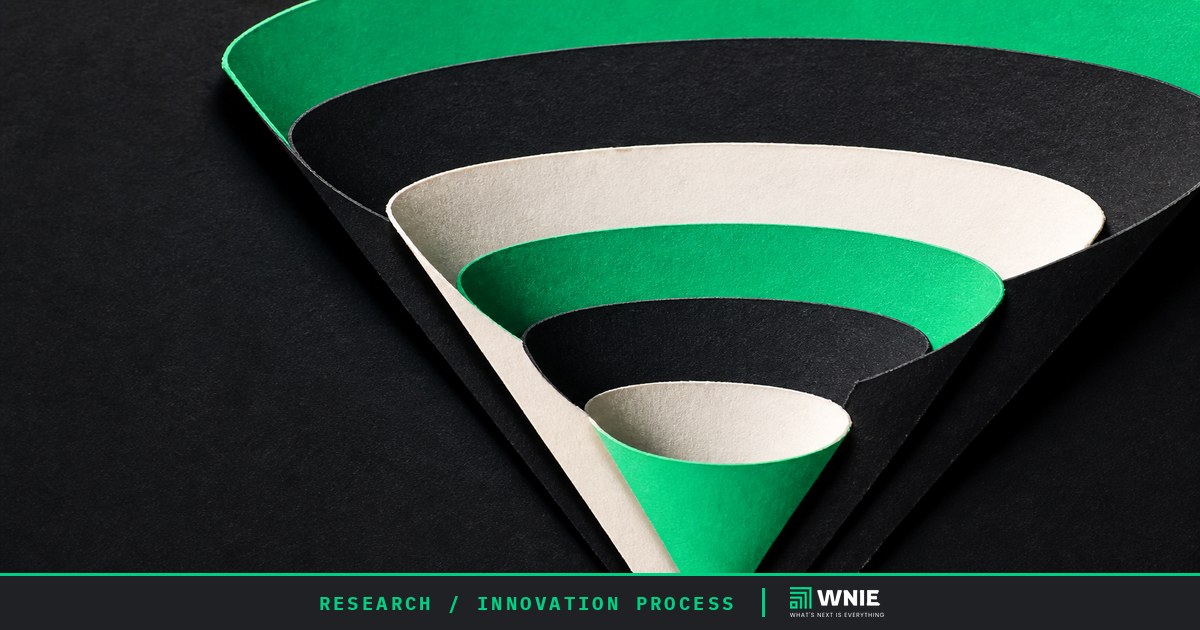
AI Deepens Three of Four Innovation Bottlenecks. Only the Volume Problem Shrinks.
Give every innovation team the same models and the results diverge anyway. Five marketing academics traced four stages of the pipeline and found generative AI deepens the human bottleneck at three of them; narrowing ideation, flattering fluent pitches, and simulating consumers who behave far too rationally.
-

S4 Doubled First-Half Profit. Sorrell Says the Token Spending Has Been “Ill-Disciplined.”
S4 Capital’s margins widened to 12.3% and its first-half operating profit doubled. Its chair says the company has been ill-disciplined on token spending, and Goldman Sachs expects token consumption to rise 24-fold by 2030. Monks passes token costs to clients at no margin.
-

AT&T Built a Router That Sends 45 Billion Daily Tokens to the Cheapest Model
Open models already carry a quarter of AT&T’s AI work, and its chief data and AI officer expects that to reach 70% to 80%. Cost is one reason — savings of 80% to 90% in some applications. Control over the company’s own data is the other.
-

Zoom Is Spending on Creators to Get Cited by AI Search
Zoom wants to be read as an AI-first work platform rather than a meetings app, and it is buying creator partnerships to get there. Its CMO acknowledges there is no measurable link between creators and AI citations yet. Brands are now picking creators by who the LLMs quote.
-
Marketers Think AI Is Raising Their Emissions. Most Haven’t Measured It.
A survey of 200 senior marketing leaders finds 88% believe AI is increasing their carbon footprint. Only 36% have comprehensively measured it. The gap sits inside an otherwise improving sustainability picture, which is what makes it a governance problem rather than a budget one.
-

Bayer’s Predictive Audience Models Are Beating Its DSP Targeting 4x in Small Tests
Bayer is testing models that spot customers before they churn and price bids by individual rather than cohort — four times standard DSP effectiveness, in small tests its media chief calls a scientific experiment. Its AI search playbook runs through medical journals, not media buys.
-

Google Lets Publishers Leave AI Search
Publishers can now keep their pages out of AI Overviews and AI Mode while staying in traditional search results. The catch is arithmetic: AI Overviews claims more than 2.5 billion monthly users, and opting out means giving up every click that flows from them.
-

Japan Airlines Scores Well on Gemini, Poorly on ChatGPT. It’s Buying Ads to Close the Gap.
Japan Airlines has a measurable problem: Gemini talks about it well, ChatGPT barely does, and Reddit — where travelers argue about premium seats — hardly mentions it at all. Its agency turned that into a targeting input, and the airline is buying its first ChatGPT ads in August.
-

ESPN’s Poker Coverage Adds an AI That Watches for Tells — After Players Are Out
The World Series of Poker returns to ESPN with an AI that reads posture and blink rate for bluffs. It runs on players only after they’ve been eliminated — and its builder doubts it would find anything on a pro who has spent a career erasing tells.
-
Time Is Selling Ads That Only AI Crawlers Can Read
Time is running a second version of its site that only AI crawlers see — and selling ads inside it. Ally Bank’s sponsored copy went to ClaudeBot and PerplexityBot; Google’s search crawler got the page humans get. Nobody has decided yet whether that kind of ad needs a label.
-
Mod Op Built Its Own AI Layer Rather Than License Seats for 500 Employees
Building rather than licensing saved Mod Op an estimated $3 million, a number describing a bill the agency never received. Its Orion platform sits over the major LLM APIs, automating agency workflows and, eventually, client ones. Most of the usage is still internal. No client has asked for a login yet.
-

WPP’s $1.8 Billion Enterprise Unit Is Selling Operating Models, Not Campaigns
WPP Enterprise Solutions now has a product line: five AI services, 12,000 people, $1.8 billion in revenue, and Accenture and Deloitte in its sights. The offer is an operating model rather than a campaign — and its CEO says the 2027 scorecard won’t be a dollar figure.
-

ampm Trades Animatronic Snacks for an AI-Built Smorgasbord
“Too Much Good Stuff” has been ampm’s platform for more than 25 years, previously carried by animatronic snack characters and in-store humor. The new campaign from RPA drops both for a generated hyper-real environment built around photographed products — the chain’s first work using AI-assisted creative tools.
-

Unilever Scales to 300,000 Creators by Automating the Grunt Work
A year after declaring creators core to its marketing plan, Unilever has grown its creator program from 10,000 to 300,000 — and its executives are now deciding which parts of influencer marketing to hand to automated systems. “In most of the places where we are using technology, technology is used for us to augment the…
-

e.l.f., L’Oréal, and Tarte Are Running the AI Playbook Other CMOs Are Still Writing
While many chief marketing officers are still working out how to fold AI into their workflows, beauty marketers have quietly become the reference implementation. Brands like e.l.f. Beauty, L’Oréal, and Kosé Corp. (owner of Tarte and Decorté) are using AI for data mining, content versioning, chatting with loyalists, and product discovery — and have restructured…
-

Google Ads Using Gemini to Predict the Conversions Its Lookback Windows Miss
Google introduced Qualified Future Conversion (QFC), a Gemini-powered metric in Google Ads that predicts the long-term revenue impact of top-of-funnel campaigns by connecting early actions — like brand searches — to expected future sales. Announced at Google Marketing Live in May 2026, it supplements rather than replaces existing conversion metrics like attributed branded searches. The…
-

HelloFresh’s AI-Built Times Square Ad Ran on Its Own Back Catalog
In June, Hightouch rented Times Square to show off ads its clients built with its new AI-powered creative tool. HelloFresh’s spot was trained on the brand’s own back catalog — and what the meal-kit company actually wanted from it wasn’t scale, but the speed of the next revision.
-

Hilton’s Playbook for the “Irrational Affinity Business”: Give Up Control
Hilton is giving away 1 billion Hilton Honors points in a social-first sweepstakes fronted by Paris Hilton and Formula One driver Lando Norris, whose McLaren team has been a Hilton partner for more than 20 years. Global CMO Mark Weinstein frames it as a way to “be back in culture and conversation, in a way…
-

Michaels’ Ask Mike Sells the Project, Not the Keyword
Michaels says shoppers who use Ask Mike, its Gemini-powered assistant, convert at more than double the rate of those using traditional search. The more interesting claim is about basket composition: people asking for a birthday party get a project, while people searching “floral fabric” get fabric.
-

Samsung TVs Get an AI Shopping Agent. Checkout Still Requires Your Phone.
Glance and Samsung formed a partnership to turn the living room screen into a personalized, AI-powered shopping destination — an agentic commerce experience rolling out across millions of Samsung smart TVs in the United States. Built on Glance’s proprietary AI platform and running on Samsung’s Tizen OS, it lets viewers create personalized shopping feeds and…
-

xpln.ai Puts a Number on How Much Attention an Ad Actually Needs
Attention intelligence platform xpln.ai launched Ideal Attention Time, a metric that tells advertisers the minimum attention their creative needs to achieve basic business outcomes like product understanding and brand recognition. The startup, founded in 2022 with an attention measurement product and an attention targeting product, is working from a simple premise, per CEO and co-founder…
-

Americans Are Adopting AI Fast. Understanding It Is Another Matter.
Stagwell’s National Research Group is out with a study finding that while Americans are adopting AI quickly, most still use it for basic tasks – and many aren’t sure what it is. 58% of those polled believe AI is “looking up the answer in a huge database.” Just 13% correctly said AI is guessing which…
-

Google’s ATLAS Puts a Number on AI at Work: 21% of Tasks
Google’s first AI & Economy ATLAS report draws on 15 million de-identified interactions to describe what people actually do with AI. Adoption reaches 68% of occupations — but inside a typical job, AI touches about 21% of tasks, and fewer than 10% of work interactions automate anything.
-

Omnicom Media’s CEO Says the Holdco Is Now a “Capability Company”
Ralph Pardo runs the North American arm of the world’s largest agency holding company, and he says the traditional holdco is finished. His argument isn’t that AI is coming for agencies — it’s that AI has flattened the scale advantage holdcos were built to sell.
-

This Month in AI Activations: Anime Strikers, Digital-Twin Dogs, and Ads That Take Your Order
Ad Age’s latest Top 5 AI activations roundup arrives in a month when Meta shipped Muse Image, the first model from its Superintelligence Labs, and Google pushed lightweight versions of its Omni video and Nano Banana image models to cut marketers’ inference costs — models that increasingly reach advertisers directly inside the ad platforms.